
























AfICTA Pays Tribute to Late Kofi Annan

AfICTA pays tribute to Late Kofi Annan
former Secretary-General of the United Nations
18 September, 2018
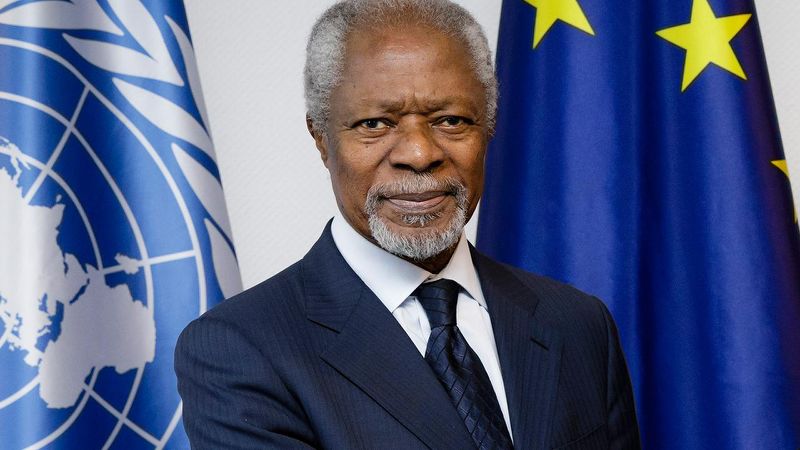
H. E. Kofi Atta Annan was born in Kumasi, Ghana, on 8 April 1938, and was fluent in English, French and several African languages.

Mr. Annan studied at the University of Science and Technology in Kumasi, Ghana, and completed his undergraduate work in economics at Macalester College in St. Paul, Minnesota in 1961. In 1961-1962, he undertook graduate studies at the Institute of International Affairs in Geneva, and in 1972 earned a Master of Science degree at the Massachusetts Institute of Technology's Sloan School of Management.

Mr. Annan joined the UN system in 1962 as an administrative and budget officer with the World Health Organization in Geneva. He later served with the Economic Commission for Africa in Addis Ababa, the UN Emergency Force (UNEF II) in Ismailia, the United Nations High Commissioner for Refugees (UNHCR) in Geneva, and in various senior posts in New York dealing with human resources, budget, finance and staff security. Immediately before becoming Secretary-General, he was Under-Secretary-General for Peacekeeping. Mr. Annan also served as Special Representative of the Secretary-General to the former Yugoslavia (1995-1996), and facilitated the repatriation from Iraq of more than 900 international staff and other non-Iraqi nationals (1990).

The seventh Secretary-General of the United Nations, served from 1997 to 2006 and was the first to emerge from the ranks of United Nations staff. Mr. Annan was awarded the 2001 Nobel Prize for Peace, jointly with the Organization. He has also received numerous honorary degrees and many other national and international prizes, medals and honours.

At Mr. Annan's initiative, UN peacekeeping was strengthened in ways that enabled the United Nations to cope with a rapid rise in the number of operations and personnel. It was also at Mr. Annan's urging that, in 2005, Member States established two new intergovernmental bodies: the Peacebuilding Commission and the Human Rights Council. Mr. Annan likewise played a central role in the creation of the Global Fund to fight AIDS, Tuberculosis and Malaria, the adoption of the UN's first-ever counter-terrorism strategy, and the acceptance by Member States of the “responsibility to protect” people from genocide, war crimes, ethnic cleansing and crimes against humanity. His “Global Compact” initiative, launched in 1999, has become the world's largest effort to promote corporate social responsibility.

Mr. Annan undertook wide-ranging diplomatic initiatives. In 1998, he helped to ease the transition to civilian rule in Nigeria. Also that year, he visited Iraq in an effort to resolve an impasse between that country and the Security Council over compliance with resolutions involving weapons inspections and other matters -- an effort that helped to avoid an outbreak of hostilities, which was imminent at that time. In 1999, he was deeply involved in the process by which Timor-Leste gained independence from Indonesia . He was responsible for certifying Israel 's withdrawal from Lebanon in 2000, and in 2006, his efforts contributed to securing a cessation of hostilities between Israel and Hizbollah. Also in 2006, he mediated a settlement of the dispute between Cameroon and Nigeria over the Bakassi peninsula through implementation of the judgement of the International Court of Justice. His efforts to strengthen the Organization's management, coherence and accountability involved major investments in training and technology, the introduction of a new whistleblower policy and financial disclosure requirements, and steps aimed at improving coordination at the country level.

One of Mr. Annan's main priorities as Secretary-General was a comprehensive programme of reform aimed at revitalizing the United Nations and making the international system more effective. He was a constant advocate for human rights, the rule of law, the Millennium Development Goals and Africa, and sought to bring the Organization closer to the global public by forging ties with civil society, the private sector and other partners.

As Secretary General of the UN, he was very quick to see the potential of the Internet for connecting peoples, and also for its future role in economic opportunity.  The structure of the World Summit on Information Summit (WSIS) and follow-up mechanism was to his credit with International Telecommunication Union (ITU) as the WSIS Secretariat and ITU and other UN agencies as Action Line facilitators.

The vision of the multi stakeholder engagement -- not just business in the UN system was also a credit to him. His appointment of the Working Group on Internet Governance (WGIG), and insisting it be multi-stakeholder (without calling it that) was the start of something that could evolve then into more inclusion in the second phase of the WSIS in 2005. His appointment of Amb. Janis Karklins as the President of the Preparatory Process was also a critical step toward inclusion of non governmental stakeholders as Amb Janis led in that gradual openness by introducing inclusion of stakeholders to give brief statements, and then to engaging more fully. When the language in the Tunis Agenda that calls for a 'forum' was proposed (I.e. Internet Governance Forum (IGF)), he was supportive of having it be a Secretary General (SG) project, which gave it certainty from the beginning. 

He inspired not just about the WSIS and the IGF, but so much more, and many of his contributions in leading the UN, made the UN a place that business could be more committed to, and want to contribute to, especially in capacity development and in peace building through their Corporate Social Responsibility (CSR) initiatives. Other SGs have built on the open platform he opened to change the culture and access to the United Nations.

Kofi's hand was not always on the wheel of the ship, but he was influencing those whose hands were on the wheel.

It was because of his work that promoted the multi-stakeholder approach and in particular the business community in the UN system that evolved into the founding of AfICTA - Africa ICT Alliance in 2012 and African business continued engagement in the Internet Governance discussions in the UN system. Till today AfICTA continues to engage in Internet Governance Forum (IGF), UN SG’s Multi-Stakeholder Advisory Group (MAG) & Working Group on IGF improvements, and UN Commission for Science and Technology for Development Working Group on Enhanced Cooperation on Public Policy matters pertaining to the Internet (Phase I & Phase II), African IGF and the National IGFs.

It has been a privilege for me to engage as a pioneer on behalf of AfICTA in the above mentioned UN activities and to deliver this tribute.

Kofi Annan died on 18 August 2018 in Bern, Switzerland, at the age of 80 and he was given a state burial in Ghana on 13 September, 2018.

May his gentle soul rest in peace and may his family, the people of Ghana and and well wishers be comforted. And may his memory endure…

By Dr Jimson Olufuye, Chairman, Africa ICT Alliance

 

Featured

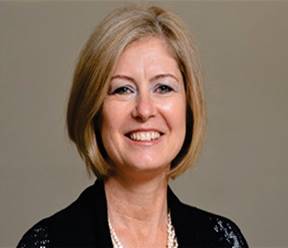
Carolyn Chalmers delivers Presentation on Ethics in 4th Industrial Revolution


Ethics, AI and Machine Learning - Ensuring IT professionals are doing the right things

Presentation by Carolynn Chalmers, Executive Director, Candor Governance


 Carolynn Chalmers, is a Corporate Governance advisor who specializes in the areas of IT, Information and Transition / Project Governance.

Carolynn is a Director of Candor Governance (Pty) Ltd through which she provides governance advisory services. Carolynn volunteers her time to the Institute of Information Technology Professionals of South Africa (IITPSA), being a member of their Social and Ethics Committee and Western Cape Chapter Committee.

Carolynn has extensive management and governance experience and has held various CIO, CTO, Board, Board Committee and other Executive roles for international, listed and private organisations, spanning many industries.

Carolynn leads large multi-disciplinary teams ensuring all organisational aspects are engaged and is best known for her successes in leading strategic organisational change initiatives. She attributes this success to the application of good governance principles; effective engagement of the board; alignment with and consideration for executive mandates and priorities; and a foundation of significant technical competence


Mrs. Carolynn Chalmers delivered a presentation on “Ethics in the 4th Industrial Revolution” she opened by introducing the concept of ethics and morality and how it has developed over time from researches such as that of Immanual Kant whose work known as “Kantian ethics” is relied upon today to give insight on ethical structures. She also stated that the South African legislation insists that companies of certain sizes need to have code of ethics and regulations which guide them. Some of such legislations include the Company Act, Bill of Right legislation, Consumer protection Regulation etc.


She furthermore explained that in as much as the initial tier of ethical responsibility in all countries is to her constitution, codes and standards (be they international or national) also govern the way in which organization and entities operate and adhere to.


A recent paper on “Ethics of Artificial Intelligence “written by Bostrom & Yudkowsky in 2011 highlights the ethical issue associated with the technological era which may not be present now but could be foreseen as potential issues that will need to be addressed in the future. Some of ethical issues highlighted in the papers include Social roles – transparency and predictability, the advance nature of AI in the future which challenges moral compass etc. some of which are manifesting today as seen in the Child Online Act which challenges things that children are allowed to see online. Less than five years later the World Economic Forum articulated 9 Challenges of AI today that pose ethical threats in the global community some of which include:

1.      Employment- a threat projected that nearly 80 of the worlds predictable workforce would be replaced by machine learning, robotics and the 4th Industrial revolution. This would result a bunch of idle hands and humans are known to not fare so well when idle

2.      Wealth – Since the 4th Industrial revolution is being pushed forward by the wealthy nations this can only result in the poorer countries getting poorer.

3.      Humanity – a challenge the 4th revolution poses is a lack of human connection with each other which leads to isolation which in turn leads to depression (the highest death cause currently in the world more that any terminal disease).

4.      Bias – human biases already exist in the world today and when they are relayed in the foundation of the source code of the AI machines we have such biases escalated.

5.      Security – the use of AI and these technologies in security are driven by the defense agencies and we don’t know how such technologies are being geared, recently the Snowden story comes to mind, it was found that the US govt had been spying on its citizen via their mobile devices. These among many are the security threats the 4th industrial revolution brings.

6.      Rights – humans rights have been completely abused time and again and currently companies have now by legislation been given rights be considered juristic person so with new legislation seeing to make these AI machines, robots be given right to be considered as imaginary persons and this can only lead to unintended consequences which would only spin out of the control of humanity.


In January 2017 at the Asilomar conference where big tech players such as Stephen hawking, Ellon Musk and many others concluded on 23 principles that should govern ethics with AI machines, Carolyn summarized the 23 principles into 3 categories and suggested that based on her experience in the IT industry these principles are very import across the technological world but only a few would be particular to it business industries of the attendees at the eConference.


Visit https://futureoflife.org/ai-principles/  to view 23 principles


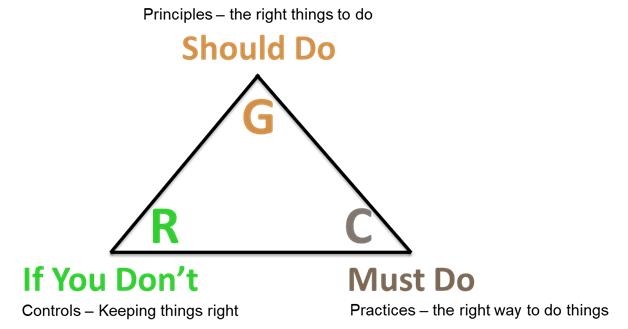
On a final note Carolyn said that although ethics is being discussed and legislated at macro level such as the global approach to ethics, National approach and African Approach. It is just as important to implement ethics at the micro level in our little ICT businesses. She enlightened the participants of the event that governance and legislation in Africa confuses governance with compliance and it stems from the American approach to governance which involves legislating cooperate governance whereas the rest of the world has taken a principled based approach to governance, she further elaborated by paraphrasing Peter Drexler who said that governance and leadership is about setting the right things to do and management is about doing those things right. Leadership is about setting what the right things to do are and herein lies the foundation for setting the principles of ethics. She shared the Integrated governance Risk and Compliance Approach.


 She emphasized the 23 principles concluded at the Asilomar conference constitute the “Should Do” which fall under the principles for governance in the IT world and in this 4th Industrial revolution. The Compliance aspect – “Must Do” defines the things that the world must do in the ICT world to be compliance with the principles of ethics, and the Risk – “If You Don’t” defines the punishment and consequences for not complying.

Mrs. Carolyn thanked AfICTA for the Chair for the opportunity given to her to deliver the presentation.


Nairobi sets for AfICTA Summit 2018

The 6th AfICTA Summit would be hosted by the Computer Society of Kenya (CSK) in Nairobi, the capital city of Kenya, from 8 - 9 October, 2018 with the theme: "Making ICT Central to the Big 4 Agenda in Africa". 

 

This important event was first hosted in Lagos, Nigeria in 2013. The Egyptian ICT industry association and the government of Egypt hosted the second edition in 2014. The third edition took place in Johannesburg and hosted by the Institute of IT Professionals of SA (IITPSA) and IT Association of SA (ITA). The 4th edition was hosted by the ICT Professionals Association of Namibia (ICT-PAN) with the support of the Namibian Ministry of ICT and last year 5th edition was held in Nigeria by the ADD Consortium with the support of National IT Development Agency (NITDA).

AfICTA Calls for Award Nominations

 
AfICTA Calls for Award Nominations
 
AfICTA – Africa Information and Communication Technologies Alliance seeks nominations for the Africa ICT Personality Award® and Africa ICT Champions Award®.
 
The AfICTA ICT Awards Ceremony is held annually during the AfICTA Summit. The award ceremony is the centerpiece of the Summit Gala Dinner, with the goal of identifying the most outstanding ICT leaders in public/private sectors across Africa, that have demonstrated exceptional achievement in using ICT to benefit organizations, governments and the society. 
 
The awards are divided into the following categories:
  • Africa ICT Champions Award® 
  • Africa ICT Personality Award® 
The Africa ICT Champions Award® 2018 is for Business leaders in the private sector that have distinguished themselves in any of the ICT fields - Hardware, Software, Services and Communication.

The Africa ICT Personality Award® 2018 is for Public/Government officials who have played significant role in shaping ICT public in their country leading to jobs.

Nominations for the awards are made by AfICTA members. The members have autonomy in nominating and selecting the most qualified candidates in their respective countries. Nominees must do or provide the following:
  • Demonstrate the effectiveness of the use of ICT;
  • Approximate number of people benefiting from the application of ICT;
  • Describe the degree of effectiveness of ICT; and
  • Evaluate the level of innovation used in implementing ICT application
Nomination ends 30 September, 2018. Voting of nominees will commence afterwards and the award will be presented to successful nominees in Nairobi during the 6th Summit slated to hold from October 8 - 9, 2018 @ Radission Blu Hotel.

The Africa ICT Champion Award® and Africa ICT Personality Award® are registered trademarks of AfICTA.
 

AfICTA Endorses 2nd Annual Infrastructure Communication Technology Conference holding in Nairobi, Kenya

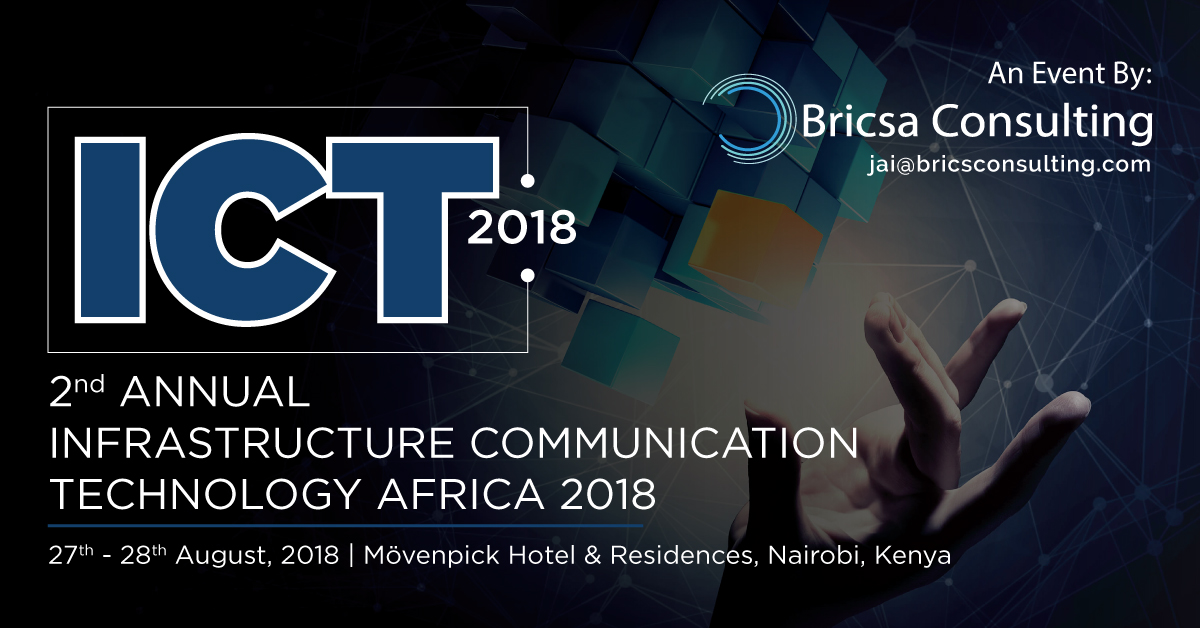
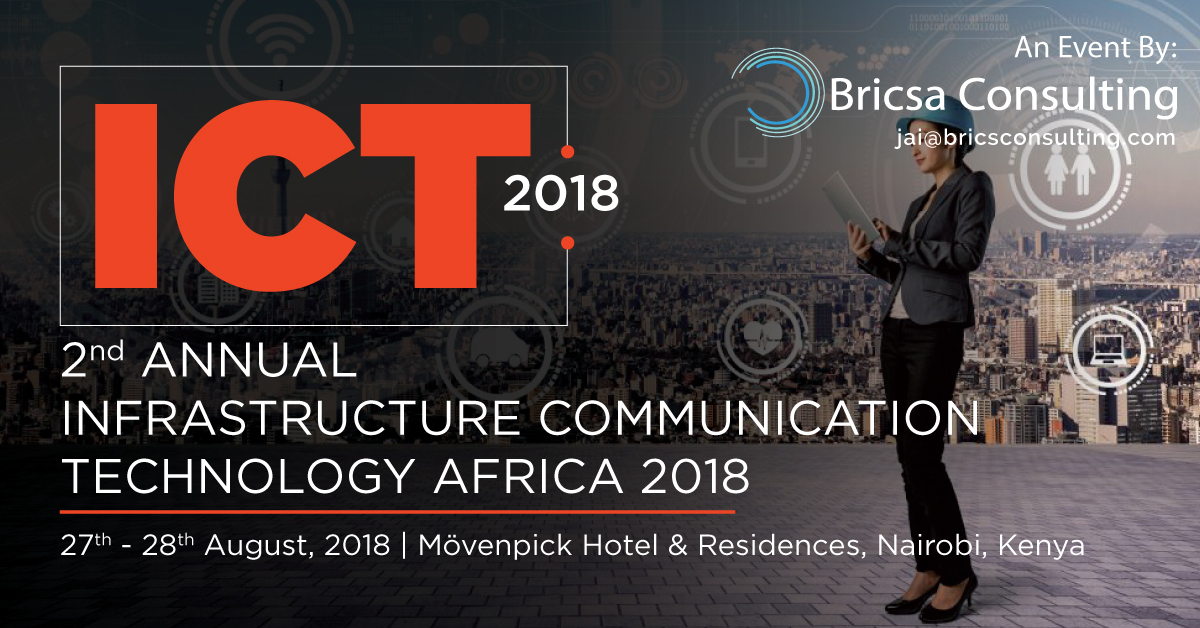
The 2nd Annual Infrastructure Communication Technology is a 2-day conference being hosted on 27th – 28th August, 2018 at Movenpick Hotel & Residences in Nairobi, Kenya.

The conference focuses on the developments in the ICT sector and its impact on Artificial Intelligence, Healthcare, Education, Cyber Security, Financial services, Cloud Computing, Aerospace, E-commerce and various other sectors, as well as, exploring the opportunities for expansion in the region considering the initiatives, programmes and projects undergoing or in the pipeline by private enterprises, government entities and public & private partnerships. It’s a platform to discuss and debate best practices which can be instrumental in helping Africa achieve its vision of becoming a knowledge based economy to compete with the global market. Learn more

Our Partners