











Featured

Preventing Cyberattacks Begins With You

KILEO: Preventing Cyberattacks Begins With You...

If you have not fallen victim of Cyberattacks, you should know it is just a matter of time before you probably fall victim. A big question is how one can prevent, detect, respond and recover from Cyberattacks.

The Key most important thing is PREVENTION because we all believe, "Prevention is better than cure".

Sadly, many believe when it comes to Cyberattacks prevention, it is a job of a certain group of people. This myth is false – everyone has apart to play when it comes to Cyberattacks prevention. In other words preventing Cyberattacks start from an individual level.

A Nation may have the best Strategy to prevent Cyberattacks; a company/organasation may have firewalls, network monitoring software, authentication processes, policies and many other mechanism to prevent Cyberattacks but if an individual is doing nothing to add value in preventing Cyberattacks – The problem will never end.

Passwords, Browsing the internet, connecting to free Wi-Fi and social engineering are some of the things each of us need to pay attention and we should not wait for someone else to come at aid.

Have you ever pause and ask yourself, how strong is your password? How often do you change it? Do you share it with others? Can it be accessed easily through phone calls or any other means? – An organisation can be tough making sure only strong passwords are used and put measures to enforce users to change their passwords at a given time but an individual can share password or allow it to be accessed easily; doing so can also lead to Cyberattacks.

An individual can connect through free Wi-Fi which a very vulnerable with Man-In-The-Middle attacks. Sometimes an individual may browse through malicious sites (with malware hidden in them) or maybe manipulated by a malicious cybercriminals by deception, into giving out information, or performing an action (Social engineering)

We have seen many companies with great defense mechanisms against Cyberattacks yet fall victims – The study shows Humans are the weakest link to the security chain; and many of the attacks are caused by the human (A failure from  an individual level)  in preventing Cyberattacks.

What should be done?

Effective awareness program is the key - A successful defense depends on having good policies and educates our people to follow them. We should constant remind everyone on their role to play in preventing Cyberattacks.

There are series of trainings in this regards, aiming to raise awareness to our people on how each can play a role to prevent cyber attacks.

Providing a good training on Phishing, Click Jacking and password, Mobile device security, insider threat and others may help our people to know their roles in protecting our cyber space.

All these awareness training should be done repeatedly because of human nature to forgetting easily. It is our duty to remind them often through formal and informal awareness programs that preventing Cyber attack begins with you, me and us.
Featured

Internet Community Needs ‘Diversity’ to...

Internet Community Needs ‘Diversity’ to Accommodate Next Generation- Marby

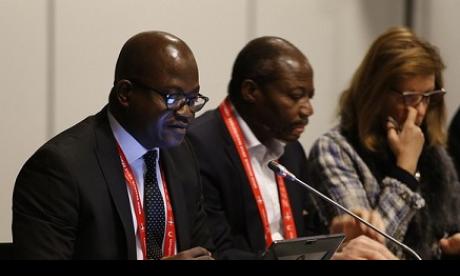
Göran Marby, Internet Corporation for Assigned Names and Numbers (ICANN’s) President and CEO, has stressed the need for members of the internet community to make conscious efforts towards accommodating the future generation of users.

He made the call at the ongoing ICANN’s 58th public meeting, taking place from 11 to 16 March in Copenhagen, Denmark.

Marby stressed the importance of diversity with respect to the future Internet users, saying “To be able to support the next generation of Internet users, we need to be diverse enough to understand the nodes going forward.”

Speaking earlier at the meeting that attracted more than 2500 registered participants, and hosted by the Danish Business Authority and the Danish Internet Forum, Mette Bock, Denmark’s Minister of Culture, commented on the IANA Stewardship Transition and ICANN’s multistakeholder model, stating “The IANA Stewardship Transition only happened because the whole ICANN community, and that is you, was able to work together and to develop proposals that received a very broad support. It was, indeed, a masterpiece and showcase for how the multistakeholder model can function and deliver sustainable results.”

The meeting is being held six months after the IANA Stewardship Transition, a milestone in the history of ICANN’s multistakeholder community.

Stakeholders from around the world, including people from businesses, governments, academia, and civil society, have convened in Denmark to discuss various topics such as the next steps after the IANA Stewardship Transition, enhancements to ICANN’s accountability and the new generic top level domain (gTLD) program.

Professor Henrik Udsen, chairman of DIFO and DK-Hostmaster, also commented on the importance of this model.

“Like ICANN, DIFO is based on a multistakeholder model, ensuring that all interest of the Danish Internet society is represented in the continuing efforts to make the .dk zone attractive and security,” said Udsen. “We believe that this multistakeholder model both at a national and international level is a vital component in creating robust solutions to the many challenges we face.”

According to statement made available to Nigeria Communications and endorsed by Buket Coskuner, global communications and Luna Madi, communications director, EMEA, Dr. Stephen Crocker, ICANN Board Chair, remarked on the importance of working together globally to maintain the Internet.

“We're all different parts of one entity united by a common purpose to help maintain an amazing global network of networks,” said Crocker. “If we do our mission well, we will facilitate communication and the flow of information around the globe, but the only way that we can do that is if we work together and the work that we do together is framed by compassion and respect.”

At the ceremony, David Conrad, ICANN’s chief technology officer announced the launch of a test bed for the upcoming Key Signing Key (KSK) Rollover. “On 11 October 2017, relatively soon, we are going to be changing the root key signing key. Before that time, DNS operators, who have enabled DNSSEC validation, must update their configurations. So what we're announcing today is a test bed for DNS operators to determine the readiness to support automatic updates..”

ICANN is in the process of performing a Root Zone DNS Security Extensions (DNSSEC) Key Signing Key (KSK) rollover.

The KSK is used to cryptographically sign the Zone Signing Key (ZSK), which is used by the Root Zone Maintainer to DNSSEC-sign the root zone of the Internet's DNS.

Maintaining an up-to-date KSK is essential to ensuring DNSSEC-signed domain names continue to validate following the rollover. Internet service providers, enterprise network operators and others who operate DNSSEC validation must update their systems with the public part of the new key signing key.

Those unable to attend ICANN58 in person are highly encouraged to participate remotely. Details for remote participation in any of the sessions can be found here.

Homepage

Welcome to AfICTA Homepage

Featured

AfICTA Meets DG NITDA on Fostering Mutual...

AfICTA Meets DG NITDA on Fostering Mutual Engagement Programme

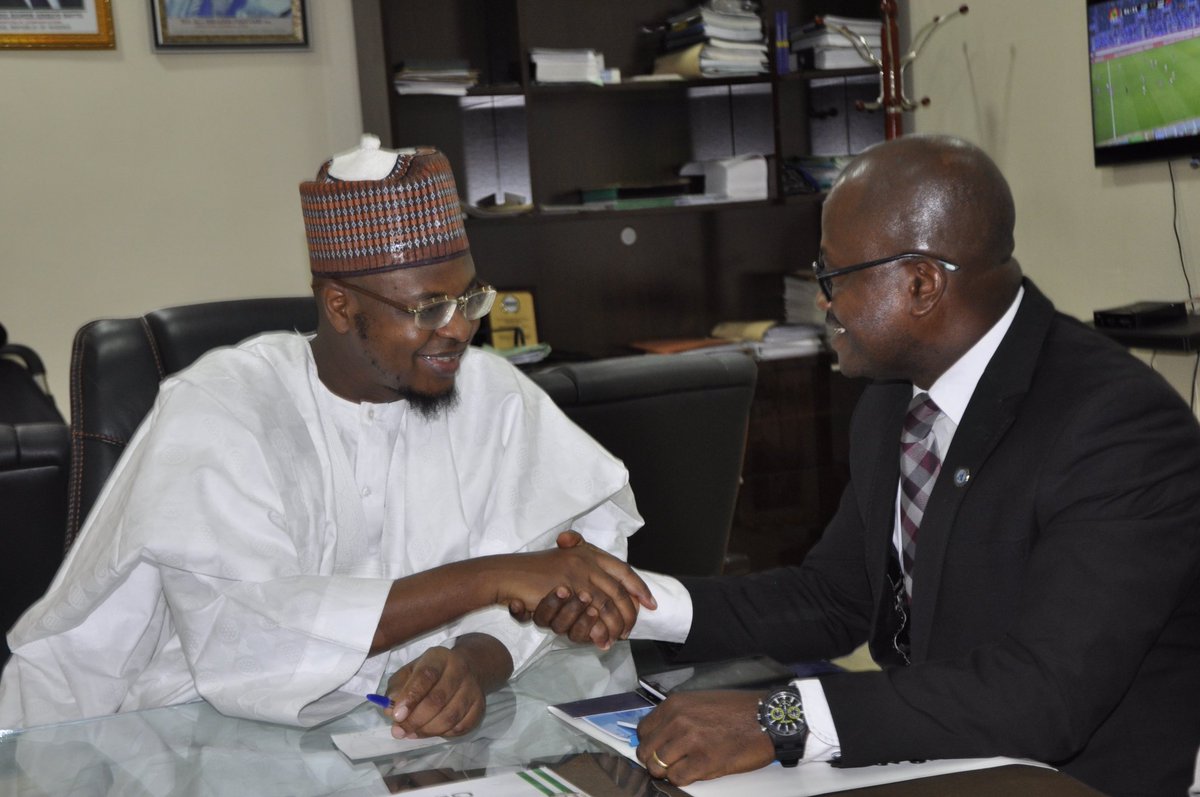
The Chair, AfICTA (Africa ICT Alliance) Dr Jimson Olufuye who was accompanied by some of his board members paid a courtesy visit to the Director General of National Information Technology Development Agency- NITDA, Dr Isa Ali Pantami on Thursday, 2 February, 2017 to discuss   steps to foster intra-African trade and to re-awake the collaboration that exists between the two organizations.

During his welcoming speech, Dr Isa Ali Pantami indicated his support to IT proposals and alliances that will aid Nigeria in its steps to becoming a digitally enabled economy. In addition, he underscored the need for collaboration with the private sector to boost the economy.

While responding, Dr Olufuye who is also the CEO of Kontemporary Konsulting appreciated Dr Pantami for his warm reception, citing that AfICTA being the focal point for Africa ICT advocacy in the global digital economy was formed in 2012 by 6 pioneer member nations and within the short period it has grown with membership from 27 member nations.

Dr Jimson Olufuye also indicated how AfICTA has been able to empower and sponsor start-up companies to AfICTA annual summits over the years. He noted NITDA’s commitment to developing the ICT industry in Nigeria through sponsorship of Nigerian Startups to international events, support for NiRA, the operator of .ng ccTLD registry and various strategic IT interventions in the country.

Dr Olufuye encouraged NITDA to be more engaging with international organizations such as the United Nations Commission for Science and Technology for Development (CSTD), ITU, ICANN, UNECA on key programme such as the annual WSIS Forum where strategies for achieving the new Sustainable Development Goals are discussed and working methods are espoused.

One of the essence of the visit was to discuss way forward on the implementation of the Memorandum of Understanding that existed between the two organisations for a win-win output. Receiving the MoU, Dr Pantami promised to act accordingly.

The meeting ended with AfICTA handing over to NITDA a copy of its Summit 2016 Report, 2016 Summit Brochure, Memorandum of Understanding, and 2017 Plan of Action.

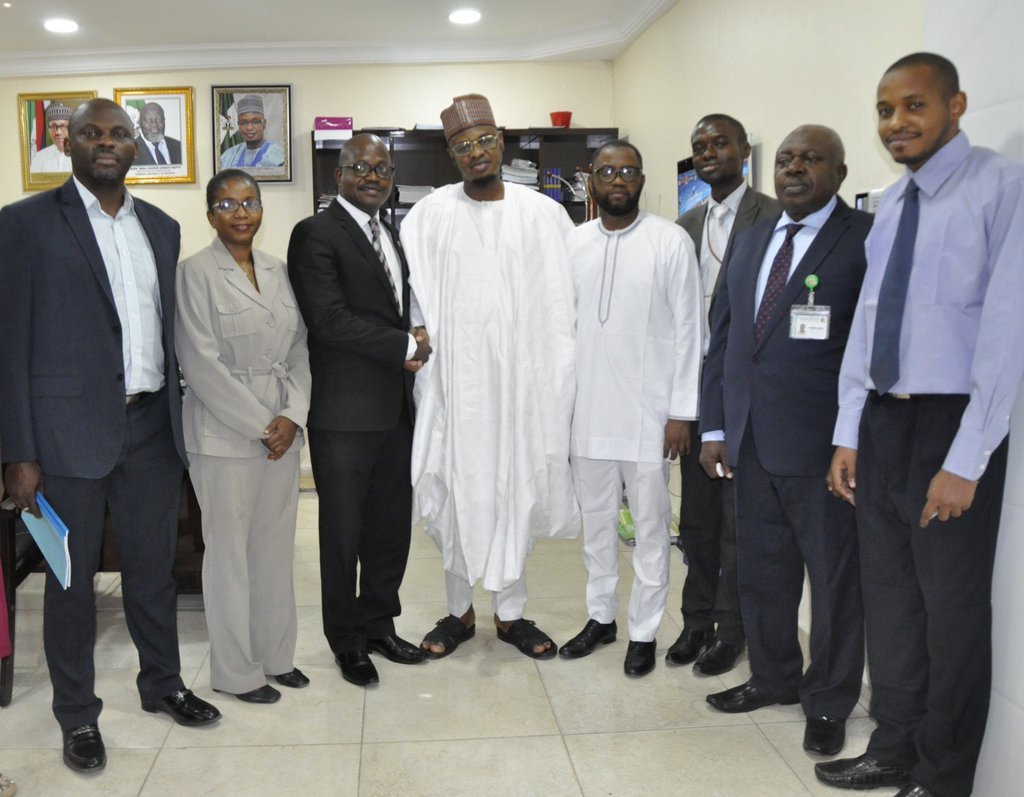
From L-R: Dr Agu Collins Agu, Ms Ola Akinyemi, Dr Jimson Olufuye, Dr Isa Ali Pantami, Engr Tola Sogbesan, Mr Oyeyemi Kayode, Mr. Umar E. Ibrahim, Mr Yusuf  Abubakar


Homepage

Welcome to AfICTA Homepage

Our Partners