

























Featured

Reflecting on the Africa Strategy at ICANN57

ICANN57 was the first ICANN Public Meeting after 1 October 2016, when the Internet Assigned Names Authority (IANA) functions contract with the U.S. National Telecommunications and Information Administration (NTIA) expired. Africa was well represented at this historic meeting, with over 100 participants from 31 countries. The program offered two sessions related to Africa: Africa Strategy Update and Joint AFRALO-AfrICANN Meeting.

Africa Strategy Update This session updated participants on the flagship programs in ICANN's Africa strategy over the past three years, including the DNSSEC roadshow, the Africa DNS entrepreneurship program and YouthComm. Participants also learned about some newer initiatives. Our regional partners provided details on other activities, including the Ethiopic label generation rules under the Internationalized Domain Name (IDN) Africa project. The session reinforced ICANN'S involvement with regional partners in the Internet ecosystem

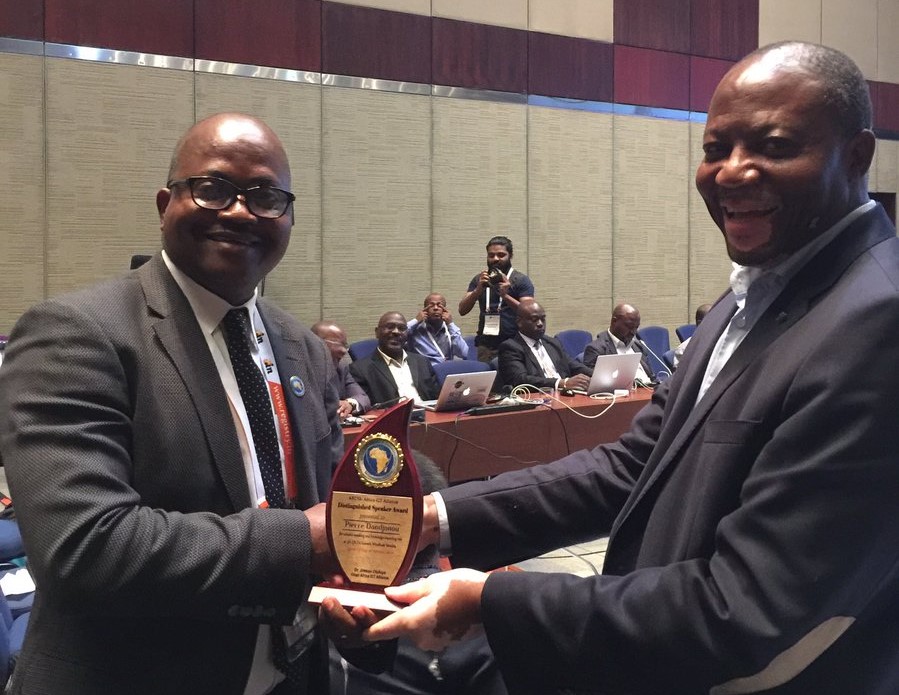
ICANN's Pierre Dandjinou, VP of Stakeholder Engagement in Africa, received a recognition award from Dr. Jimson Olufuye, Chairman of the Africa Information and Communications Technologies Alliance (AfICTA) in recognition of his active outreach effort in Africa.

Joint AFRALO-AfrICANN Meeting

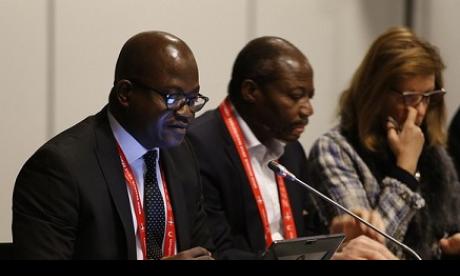
Introduced to the ICANN meetings four years ago by the African Regional At-Large Organization (AFRALO), the session is a venue for the African community to meet and discuss progress on the continent's participation in ICANN to date. ICANN's President and CEO Göran Marby addressed the community, highlighting the importance of the IANA functions transition. He thanked African community members for their full involvement in the transition process. During the comment period with Marby, a recurring theme was the need for ICANN to deepen its support in Africa so that Africa can become a true participant and contributor to ICANN's policy development and other activities.

Save

Save

Save

Featured

Yusuph Kileo honoured as Cyber Security Expert of the year

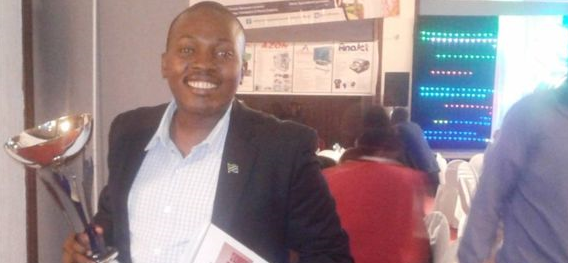
Yusuph Kileo was recently honoured with the cyber-security expert of the year award in Nairobi Kenya. He is a cyber security and digital forensics expert on the National Cyber-security Forum (Tanzania) and a board member of the Africa ICT Alliance (AfICTA).

Kileo while briefing   journalists indicates how exiting the digital age is in human history due to the rapid advance of technology and the rise of the Internet of things. He also spotted the sad fact that the rise of cyber threat increases at the same rate.

He said "We have reached a point where the question is no longer if you can be attacked but when will you be attacked”. We have witnessed massive attacks on big organisations with good protection mechanisms. Some have been attacked by kids whom no one ever expected". Kileo further intimated journalists on how these attacks often occur very rapidly and the time to discover those attacks remains very long – discovery of some attacks has taken months and even years. Discovering attacks is a big challenge but not having the right skillset to do a proper incident management and digital forensics within organizations leads to another bigger challenge. Therefore, apprehending those behind the attacks becomes invisible.

Enumerating the most common cybercrime committed as: company policy violations; embezzlement; e-mail harassment; murder; leaks of proprietary information; and even terrorism, Kileo maintained that Law enforcement, network administrators, attorneys and private investigators must rely on the skills of professional computer forensics experts to investigate criminal and civil cases

Kileo who expressed his displeasure on how digital evidences are being handled said “We tend to forget that if the collection of digital evidence goes wrong, everything else will follow suit and the end result will be inaccurate" also admonished cyber-security experts to ensure standard is observed while digital forensics investigations are being carried out. Professional conduct should be maintained and the result should be the same no matter how many times the investigation is repeated. This can only be achieved by documenting everything from the initial point and maintaining a proper chain of custody.

"The main aim of digital forensics investigation is to bring the actual person behind the cyber-attack to book. With this in mind an expert witness remains a very important fact to consider. The one who can make the court understand and help it to provide a proper judgment."

Yusuph Kileo will speak at the ITWeb Security Summit 2017 on incident management, cyber forensics and investigations – perspectives from African continents.

Reference: http://www.itweb.co.za/index.php?option=com_content&view=article&id=158055


Yusuph Kileo Honoured as Cyber Security Expert of the Year

Yusuph Kileo was recently honoured with the cyber-security expert of the year award in Nairobi Kenya. He is a cyber security and digital forensics expert on the National Cyber-security Forum (Tanzania) and a board member of the Africa ICT Alliance (AfICTA).

Kileo while briefing   journalists indicates how exiting the digital age is in human history due to the rapid advance of technology and the rise of the Internet of things. He also spotted the sad fact that the rise of cyber threat increases at the same rate.

He said "We have reached a point where the question is no longer if you can be attacked but when will you be attacked”. We have witnessed massive attacks on big organisations with good protection mechanisms. Some have been attacked by kids whom no one ever expected". Kileo further intimated journalists on how these attacks often occur very rapidly and the time to discover those attacks remains very long – discovery of some attacks has taken months and even years. Discovering attacks is a big challenge but not having the right skillset to do a proper incident management and digital forensics within organizations leads to another bigger challenge. Therefore, apprehending those behind the attacks becomes invisible.

Enumerating the most common cybercrime committed as: company policy violations; embezzlement; e-mail harassment; murder; leaks of proprietary information; and even terrorism, Kileo maintained that Law enforcement, network administrators, attorneys and private investigators must rely on the skills of professional computer forensics experts to investigate criminal and civil cases

Kileo who expressed his displeasure on how digital evidences are being handled said “We tend to forget that if the collection of digital evidence goes wrong, everything else will follow suit and the end result will be inaccurate" also admonished cyber-security experts to ensure standard is observed while digital forensics investigations are being carried out. Professional conduct should be maintained and the result should be the same no matter how many times the investigation is repeated. This can only be achieved by documenting everything from the initial point and maintaining a proper chain of custody.

"The main aim of digital forensics investigation is to bring the actual person behind the cyber-attack to book. With this in mind an expert witness remains a very important fact to consider. The one who can make the court understand and help it to provide a proper judgment."

Yusuph Kileo will speak at the ITWeb Security Summit 2017 on incident management, cyber forensics and investigations – perspectives from African continents.

Reference: http://www.itweb.co.za/index.php?option=com_content&view=article&id=158055

Save

Save

Featured

AfICTA targets 1m ICT jobs across Africa by 2020

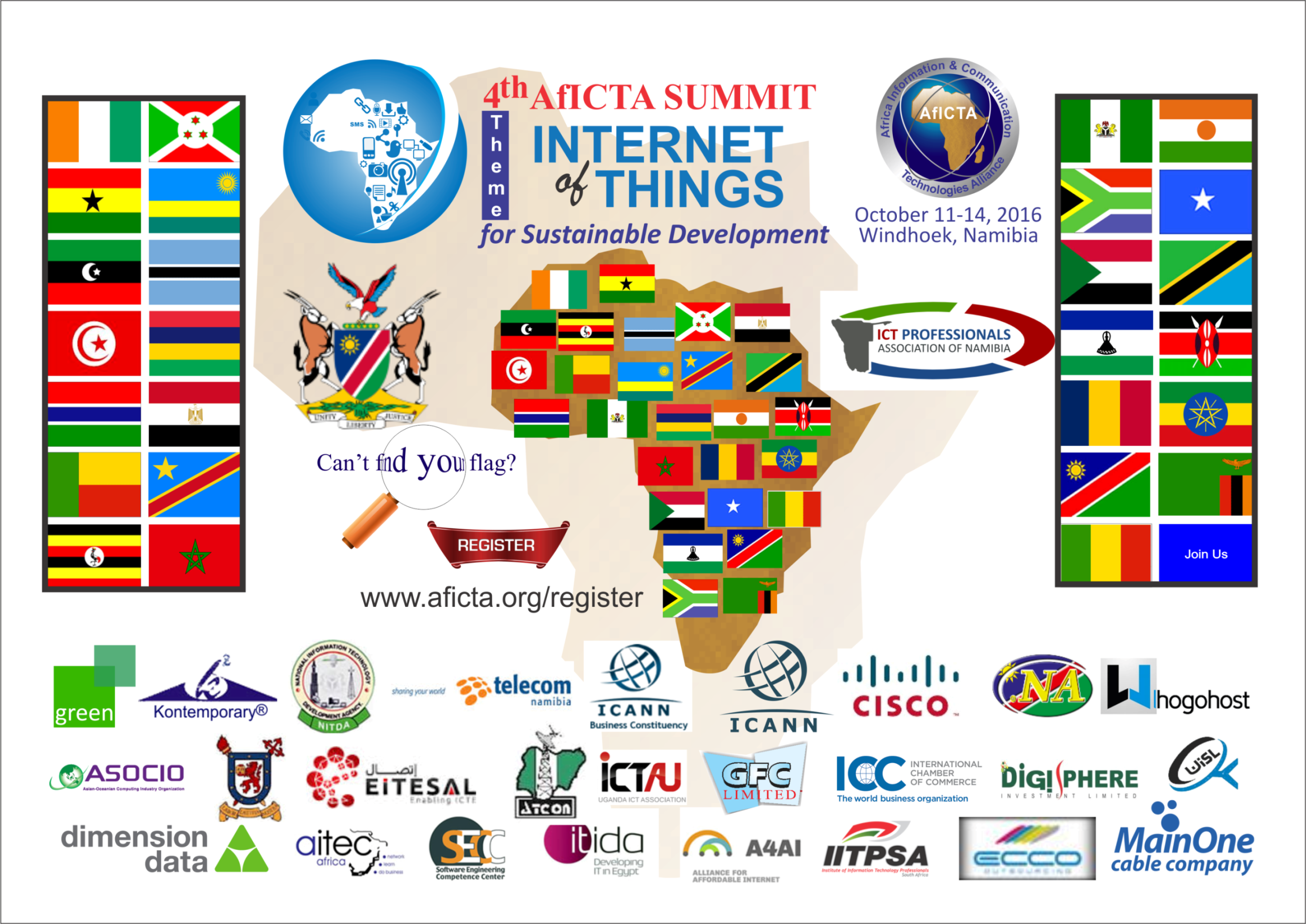
How best to create no fewer than 1 million new Information Communications Technology, ICT, jobs by 2020 across African continent was part of  declaration at the end of the 4th annual summit by the Africa Information and  Communication Technologies Alliance (AfICTA) held recently  in Windhoek, Namibia.

The initiative is aimed at developing and promoting Africa to be the number one outsourcing destination in the world.

The Chair of the summit planning committee and Chairperson, ICT Professional Association of Namibia and a member of the AfICTA Board, Mr Paul Rowney in a communique signed at the end of the capacity building summit said that the initiative must be embraced by all relevant stakeholders.

To make this work within the timeline, he said that AfICTA was seeking for volunteers from Nigeria, South Africa, Ethiopia and Egypt in the phase one of the project.

The summit was organized by the Africa Information and Communication Technologies Alliance, and hosted by the ICT Professionals’ Association of Namibia (ICT-PAN) under the auspices of the Ministry of ICT, Namibia.

According to the Summit, Internet for all, connectivity for all and Broadband for all by 2020 should be top priority for all governments in Africa.  AfICTA summit also called on all members and stakeholders to volunteer support for the Global Outsourcing (GO) Africa initiative.

The summit among other things, welcomed the October 1, 2016 transition of the Internet Assigned Numbers Authority (IANA) stewardship by the US Government to the global multi-stakeholder community, ICANN, Internet Corporation for Assigned Names and Numbers; and urges all stakeholders to actively engage and own the oversight process.

Considering that the Summit focused on sub-themes which included: The role of ICT in job creation; IoT, Affordability, Connectivity & Scenarios; Youth Development; SDGs & Cybersecurity; Internet Governance for SD – Aligning the Technical, social and political layers together; Sustaining critical infrastructure for IoTs and Keeping Internet safe, secure and resilient,  summit declares as follows: In view of and in alignment with the United Nations Sustainable Development Goals (SGDs) national ICT policies, laws, regulations and practices should be reviewed for compliance and for inclusive benefits for all citizens.

The Internet of Things (IoT) presents a new opportunity for job creation in all sectors. That concerned stakeholders particularly governments and the private sector should evolve IoT strategies that maximize job opportunities for African youths. In this wise, long term tax holidays should be prioritized for business startups.

National multi-stakeholder dialogues on Internet Governance (IG) should be supported and, where not existing, convened in collaboration with government, private sector, civil society and the technical/academic community. That such dialogue will engender trust and commitment in tackling in-country IG issues such as Internet access and affordability for all, cybersecurity, mitigating cybercrime, quality of service, local content digitization, innovation/creativity, IPv6deployment and other issues.

In order to end poverty (SDG1), African governments as a matter of urgency should remove all forms of barriers to free flow of people and investment resources across the region. A visa-free regime for business to business should be prioritized while, in the interim, visa on arrival service should be established.

AfICTA’s commitment to the initiative of creating one million new ICT jobs by 2020, which was proposed by the Egyptian ICT alliance – EITESAL. This initiative is aimed at developing and promoting Africa to be the number 1outsourcing destination in the world and should be embraced by relevant stakeholders.

Save

Featured

'Windhoek Declaration' spells out Africa's ICT challenges

'Windhoek Declaration' spells out Africa's ICT challenges

The national ICT policies within many African countries should be reviewed for compliance, IoT presents a new opportunity for job creation, and governments should prioritise visa-free business-to-business regimes.

These were a few of the key topics discussed at the IoT-focused 4th AfICTA (African ICT Alliance) Summit, held recently in Namibia, hosted by the ICT Professionals' Association of Namibia (ICT-PAN) under the auspices of the Minister of ICT, Namibia.

The Summit has given rise to the 'Windhoek Declaration', officially presented on 21 October 2016, which outlines several intentions or objectives decided upon by delegates and stakeholders at the event.

Paul Rowney, Chair of the Summit Committee in Windhoek, says while the alignment of ICT laws and policies with the United Nations Sustainable Development Goals (SDGs) is what the continent is striving towards, the reality is that laws within many African countries has not kept up with the internet age.

"Our governments and regulators are struggling to bring into place relevant legislation. In many cases our national institutions work in isolation creating restrictive environments that are not conducive to the realisation of the SDGs. Further cyber policies are often absent or misconstrued, ICT policies are outdated, and ICT regulators are driven with a 20th century telecommunications mentality," says Rowney.

The Windhoek Declaration also makes reference to long-term tax holidays for business startups and the need to leverage IoT for job creation in Africa.

It also places emphasis on a visa-free regime for business-to-business, with a call to African governments to "remove all forms of barriers to free flow of people and investment resources across the region" and set up a visa on arrival service as an interim measure.

"One of the big challenges that the ICT industry faces is the free movement of professionals across the continent. It is often easier for a non-Africa resident to apply for- and be granted a travel visa than it is an African resident. Also our visa regimes often favour tourism over business and trade, even within some of our regional trade blocks. The AU passport if implemented could ease such challenges, but until such time as our leaders realise that the free movement of skilled professionals across the continent will not only promote job creation, and in particular youth employment, it will also enhance the contents global competitiveness," said Rowney.

AfICTA Chairman Dr Jimson Olufuye said long-term tax holidays for business startups is a viable proposition in Africa to grow entrepreneurship and reduce unemployment.

He added that the Universal Service Fund (USF), where available, should be used to fast-track the realisation of these goals.

AfICTA Secured 2 Slots From IGF Limited Participant Slots

Save

AfICTA Summit 2016

4th_Summit_Backdrop

Our Partners